45 / Foundation Models & Science
Simulating Quantum Entanglement
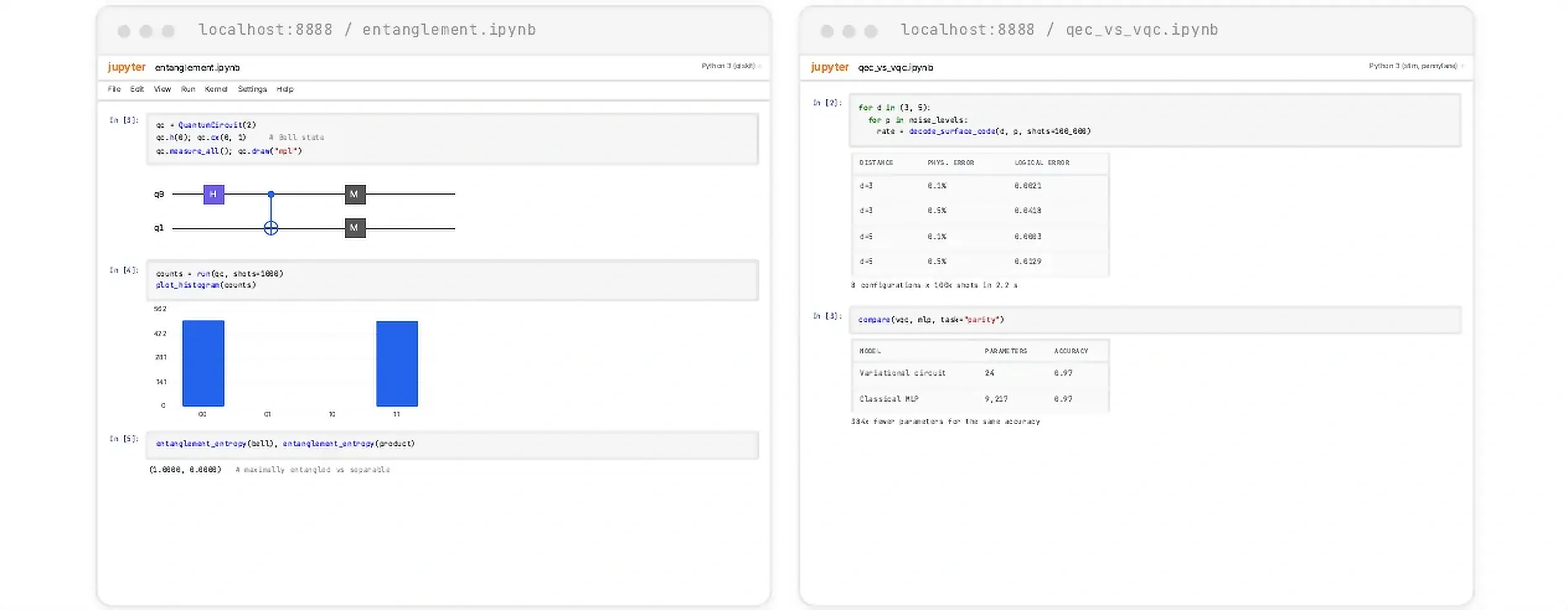
We simulated entangled quantum states and measured what makes them special, built the standard quantum gates from scratch, and showed a quantum circuit matching a task with 384 times fewer parameters than a classical network.
- Built by
- 360 Labs Research
- Stack & approach
- ResearchQuantum ComputingQiskitError CorrectionVariational Circuits
The problem
Understanding where quantum methods beat classical ones means building and measuring quantum systems, not just reading about them, from distinguishing entangled from unentangled states to benchmarking error-correction decoders.
Solution & architecture
Simulated entangled states (Bell states), measuring entanglement entropy to tell them apart from unentangled ones, and built standard gates from first principles. Benchmarked a surface-code error-correction decoder across 2 code distances and 4 noise levels, and compared a variational quantum circuit against a classical neural network.
Research highlights
Built, not just read
Gates and states from first principles
Measured advantage
Entanglement entropy distinguishes states
Quantum vs classical
VQC matched the task, far fewer params